Unequal battle with Modi govt: Here’s why Arvind Kejriwal needs to win a state
“What’s power without the power to harass?” Delhi Chief Minister Arvind Kejriwal must be wondering aloud between tweets on Prime Minister Narendra Modi’s sinister design to get him fixed. With 10 of his MLAs arrested, and the Aam Aadmi Party already into the prediction game on who would be next, he would be ruing having no police force or enforcement agency to let loose on rivals. The high decibel attention-grabbing noises for media consumption serve only a limited purpose. The real power lies in the good old lathi, in whatever shape or connotation it comes. This realisation seems to be making him desperate to win at least one state, a full-fledged one unlike Delhi.
Actually, his options are running out. At the rate his MLAs are getting arrested, a majority of them might end up behind bars by the end of his tenure. It is a hugely unequal battle between the unseen forces and his government – or, as Modi and him as he would like to call it. One has all the resources and not averse to using them; the other has none, barring the vocal chords. One takes almost sadistic pleasure in needling the other on a persistent basis the other can hardly do anything about it other than howling louder than necessary at each pin-prick. One has the energy to drag the other into enumerable legal battles while other is too small to keep engaging. To make matters worse, his party is losing sympathy among the talking classes.
The desperation showed the other day when Kejriwal in a video address to his supporters asked them to be prepared for many attacks or part company if they are afraid. After cutting the party off its intellectual and idealistic dimensions, the only way he can fight back is through raw power that high offices bring. He might have underestimated the sundry policeman earlier – remember his use of the word thulla? – but now with so many of his colleagues embroiled criminal cases, he must be realising what he means in the power equations among political players. If he had the powers to arrest and control over policemen then perhaps then the playing field would be more level. The BJP or whoever is orchestrating the arrests would be more careful.
That’s the big reason, he must be thinking, he must win a state, Punjab, Goa whatever. In the present scenario even thegau rakshaks in the country are more powerful than him. The latter can form groups and deliver vigilante justice without a care in the world. If they thrash Dalits or Muslims on the suspicion of possessing beef – they don’t need a reason to thrash anybody actually – they have nothing to fear since the police won’t touch them. The same cannot be said about AAP members though. Their ability to strike back comes to nil with no power with their government to protect them. So he has to win a state.
Readers might detect a hint of sarcasm in the piece thus far, but the purpose here is to narrate the reality of power equations involving conflicting political forces. It is possible all of Kejriwal’s MLAs are no saints and are guilty of whatever they are accused of, however, the situation would be much different if their government wielded real power. People in other parties with similar charges are hardly meted the same treatment
Opposition flays government on price rise, Jaitley defends it (Roundup)
New Delhi, July 28 (IANS) The burning issue of spiralling prices of essential commodities, particularly pulses, came up for discussion in the Lok Sabha on Thursday, with Congress Vice-President Rahul Gandhirubbing it in by calling Prime Minister Narendra Modi 'Arhar Modi'.
The government denied the opposition charges on the price rise, maintaining it was only a seasonal and common phenomenon before monsoon. It asserted that inflation has been brought down substantially.
Replying to Congress Vice-President Rahul Gandhi's criticism, Finance Minister ArunJaitley defended the government performance at a "difficult stage" and recalled that the NDA government had inherited double-digit inflation.
"We have been able to keep things under control despite two years of bad monsoon, which resulted in higher food inflation," Jaitley said.
He said that India's wholesale price index (WPI) was in the negative for 18 months in succession till recently, which goes to the credit of the NDA government.
This is in contrast to high prices that ruled during the last two years of the previousUnited Progressive Alliance government till May 2014, Jaitley said in the Lok Sabha while replying to a debate on rising prices.
The minister said during the last two years of the United Progressive Alliance government, food inflation was moving over 11-12 per cent, while the wholesale price inflation ranged over 6-7 per cent.
"High prices of dal/pulses is a concern for the entire nation. The government has taken steps to address this mismatch in production and demand. The government is taking steps to contain inflation as CPI (consumer price index) in 2012-13 was in double digits and around 9.5 in 2013-14," Jaitley said.
He said he was hopeful that the production of pulses will rise to 20 million tonnes this fiscal.
Earlier, taking a dig at Modi, the Congress leader called him 'Arhar Modi, Arhar Modi' and asked him to announce a date by which the prices will come down.
He was playing on the battle cry of 'Har Har Modi' used by the Bharatiya Janata party leader's supporters in the run-up to 2014 general elections. The slogan 'Arhar Modi' first became popular during the Bihar assembly elections last year.
In his brief speech in the Lok Sabha, Gandhi reminded the Prime Minister of his promises during campaigning for the 2014 general elections and said in the last two years Modi has made "hollow promises" to the people.
Gandhi repeatedly referred to the 'Har Har Modi' slogan and said now the people are reaping its harvest by saying 'Arhar Modi' -- a reference to growing prices of pulses, including arhar dal.
The coinage #ArharModi has been trending quite heavily on the social media since Gandhi's speech in the Lok Sabha.
Reminding Modi of his election speech in Uttar Pradesh in 2014 -- when Modi said he wanted to be a 'chowkidar' (guard) for the country and not the Prime Minister -- Gandhi said the task of safe-guarding the interests of the poor should now be "left to the Congress".
The Congress Vice-President also referred to Modi's speech at an election rally inHimachal Pradesh in February 2014, wherein he had said that "Maa, bachche raat raat rote hain, aasoon pee ke sote hain (mothers and children cry the whole night and sleep after swallowing their tears)".
"What a dialogue," Gandhi exclaimed sarcastically. Modi was not present in the house.
"I want to remind the Prime Minister of the promises he made that when the BJP government comes to power, it will bring down the prices," the Congress leader said.
"Modi ji, jitne khokhle vaade karne hai kariye... 'Stand-Up India', 'Make in India'. Par is house ko ek tareekh de dijiye jab market mein daam kam ho jayenge (Modi ji, make as many empty promises as you want... but please announce a date in this house when the prices will come down)," Gandhi said.
He alleged that the National Democratic Alliance's flagship programmes like 'Make in India' and 'Stand-Up India' had failed as they could not generate jobs for the youth.
Gandhi claimed that compared to 2014, prices of certain essential items have gone up between 100 and 300 per cent.
"Now you are the Prime Minister... you have become a big man. Why should you be a chowkidar too? Leave that duty to us, the Congress party," Gandhi said amid strong protests from the BJP members.
Reeling out figures, the Congress leader said urad and tur pulses, priced around Rs 70 a kg in February 2014, have now gone up to Rs 160 and Rs 180 a kg respectively this month.
He said there was a small difference between the minimum support price of Rs 45 a kg given to the tur/arhar dal growers and its market price of Rs 75. Now, the MSP has risen to Rs 50, but the price of the pulses has gone up to Rs 180 a kg, Gandhi said.
"So there is a gap of Rs 130 under the NDA government. Where is this Rs 100 going?" he wanted to know.
Claiming the government had waived off Rs 52,000 crore dues of the big business houses, Gandhi said such moves did not benefit the cause of the poor people, farmers and housewives.
The BJP fielded Hukumdev Narayan Yadav immediately after Gandhi's speech and the lawmaker from Bihar denied the Congress leader's allegation that the Modi government was responsible for price rise.
"Contrary to Rahul Gandhi's allegations, the Modi government has catered most for the welfare of the poor people. Opening bank accounts under the Jan Dhan scheme and cheap cooking gas to the poor only shows the government's commitment towards them," Yadav said.
Trinamool Congress member Saugata Roy also slammed the government for skyrocketing prices.
Raising the matter, Communist Party of India (Marxist) member P. Radhakrishnans uggested the government has to end different types of cess to control inflation.
"How many cess are there in India now? There is cess on education, road, Swachh Bharat and Krishi Kalyan. This is also one of the most important reasons for price rise."
"The soaring prices have caused great unrest and frustration among the people. People belonging to the poor and middle class are hit the hardest. Moreover, soaring prices have become a big threat and an open challenge to the government,"AIADMK member P. Kumar said.
NEW DELHI: Many outraged opposition Parliamentarians stormed the well of the Rajya Sabha on Wednesday morning, to protest Prime Minister Narendra Modi's "silence" on violence against Dalits and Muslims by alleged cow vigilantes.
The MPs were also up in arms following news reports earlier on Wednesday that two Muslim women in Madhya Pradesh were beaten up for allegedly carrying beef they intended to sell. This alleged incident has occurred a little over two weeks after some Dalit youths in Gujarat's Una taluka were flogged, allegedly by cow protection vigilantes , for skinning a dead cow.
In the RS on Wednesday, BSP chief Mayawati raised the issue of violence against Dalits and Muslims by alleged cow vigilantes , and what she called "inaction" against them by the central government and the governments of BJP-ruled states. She was soon joined by Congress members who also protested on the same issue.
"The BJP raises the slogan 'Mahilaon ke samman mein, BJP maidan mein' slogan, yet in BJP ruled Madhya Pradesh women thrashed on beef rumours," Mayawati said. She was referring to the ruling party's slogan that says it urges respect towards women. She said the BJP isn't following its own slogan.
Congress party MPs then took up the issue saying Dalits and Muslims are increasingly becoming targets of violence. "We agree that cows should be protected but we are against using cow protections as an excuse to target Dalit and Muslims," Ghulam Nabi Azad of the Congress said.
"Violence in any state is condemnable, we don't justify it, but the Madhya Pradesh government took action on the issue that Mayawatiji spoke about," said the BJP's MA Naqvi, who's minister of state for minority affairs.
The BSP's Mayawati also brought up the case of expelled BJP member Dayashankar Singh who on July 19 made crude comments about her and likened her to a prostitute.
" Dayashankar Singh is in Jharkhand which is ruled by the BJP and that clearly means he is being protected," Mayawati added.
,
Earlier this week too, the BSP president blasted the BJP by calling it "anti-dalit" and accusing it of having "pressured" the UP government against arresting Dayashankar.
The BSP leader said that merely expelling Dayashankar isn't good enough; he must be arrested. Her party has filed an FIR against theexpelled BJP member+ under the atrocities against Scheduled Castes and Tribes law, in addition to other laws.
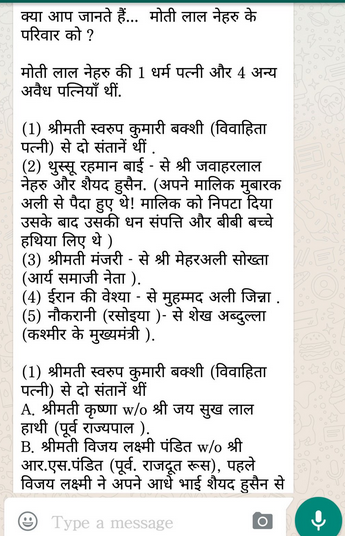
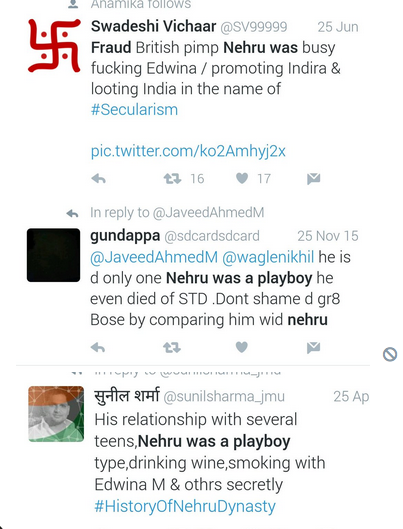
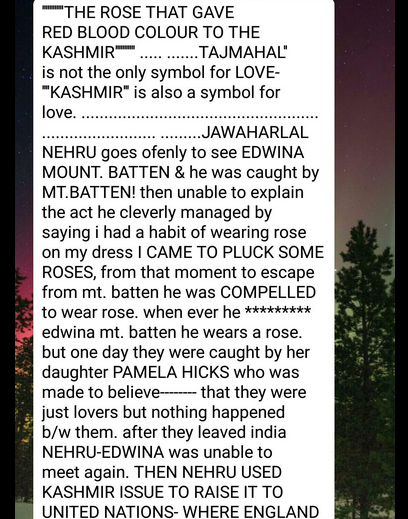
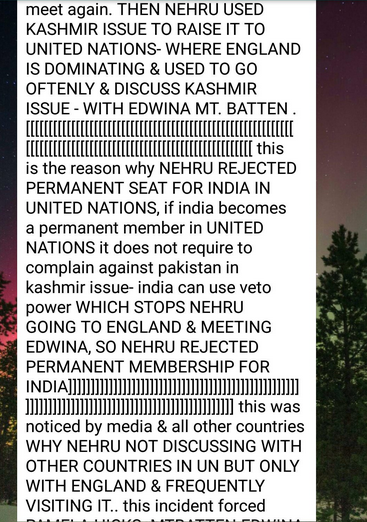
Your office Whatsapp group killed Jawaharlal Nehru. Oh, you say, but he died of syphilis! Before that, he had an affair with thirteen women, including Jackie Kennedy, Edwina Mountbatten and Padmaja Naidu. Not to mention he was secretly a member of the RSS, Ghulam Nabi Azad and Amitabh Bachan are his sons and of course there are a million illegitimate little Nehrus running around India to this very day. None of these fantastical claims are fabricated; they’re allegations yanked straight from the phenomenal encyclopedia known as the Indian Whatsapp Group.
It’s not as if Indian politicians aren’t dramatic enough without needing to falsify facts about them. One of them drank his own urine daily, Indira Gandhi hired astrologers frantically before her death, Amit Shah’s existence, all this could make a Bollywood film complete with comedy, tragedy and murder. Certainly; political propaganda has lasted from the moment the first caveman elected himself ruler of his tribe and it’s not going anywhere. Character assassination has been carried out through the media numerous times. However, this aims to explore how the advent of social media, and India’s sudden plunge into the putrid depths of Whatsapp and Facebook groups has entirely murdered the man formerly known as Chacha Nehru; and like a crow arising from the ashes of a phoenix, built an unrecognizable creation in his place. And we should all be terribly ashamed.
During Nehru’s time as Prime Minister; political criticisms ran wild. As nationalistic fervor tapered off years after independence and Pakistan, Kashmir and China began to creep into the Indian equation, along with it came the scathing articles. Nehru was slandered in all directions by the printed press, from unfit, too much of a pacifist, too old, too reliant on Menon – all perfectly acceptable criticism, whether right or wrong in one’s opinion. An oft-told incident is of Keshav Shankar Pillai’s cartoon depicting an emaciated (which is also somewhat ironic, as he had gained quite a bit of weight toward the end of his life) Nehru still, gaspingly, trying to complete the final leg of a race to which he replied ‘Don’t spare me, Shankar.’
Criticism was criticism in those days, no matter how poisonous or rude. It was only when criticism reached personal levels that politicians sent rebuttals to publishing firms. Perhaps this was the reason why political criticism didn’t cross a threshold – because newspapers and magazines were still part of the public press, hence accountable for what they have to say, and if proven a lie would have to face the consequences. Of course, there were political cartoons; which did not merely feature but rather starred the Gandhi family and other top politicians, often both rude and crude at the same time. Yet, people did not believe such cartoons were representative of the truth, or in fact came anywhere near to the truth. As Rohinton Mistry says in Such a Long Journey – “Whatever you read in the paper, first divide by two—for the salt and pepper. From what’s left, take off ten per cent. Ginger and garlic. And sometimes, depending on the journalist, another five per cent for chilli powder. Then, and only then, will you get to the truth free of masala and propaganda.”
People had spread rumours by mouth of course, but those were treated just like their political cartoon counterparts (Interview), and discussed avidly but never treated as the gospel truth. It’s almost wondrous, for someone like me who’s grown up with social media, that people had the innate self capacity to be perfectly aware of newspapers were that full of propaganda from one side or the other, and that whilst someone or the other may whisper comments about Edwina Mountbatten, nobody would declare that India lost the China war because of her.
And then came Whatsapp.
Whatsapp groups are the communal Roman baths for the Indian middle class, and amongst the sarcastic, thickly veiled quips lies a creeping agenda to defame old leaders perceived as ‘Congress Leaders’ with Nehru being the prime target. Mind you, these were not rumours that suddenly were thought up and written down as jokes, it is a well thought out method of warfare, sly yet almost genius. Why? Because they’re almost believable. Because Whatsapp and Facebook are private networks; and had such networks existed during the Emergency, perhaps India today wouldn’t be as we know it. Yet the same Internet with which politics is carried out at rapidfire pace today, from Modi-ji’s Twitter followers to the infamous ‘coward and psychopath’ tweet, is also part of a far more nefarious campaign – that of complete falsehood.
Let’s take a trip. Put on protective goggles.
gently clean your eyes now with hydrochloric acid
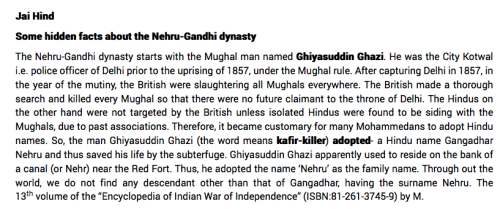
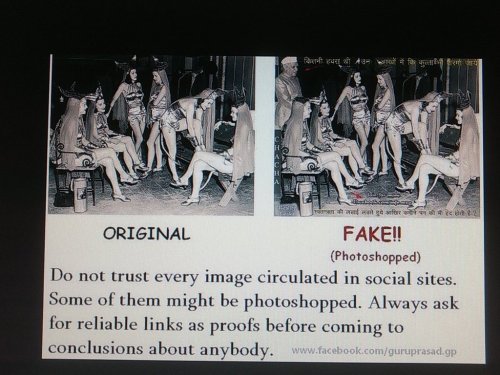
This is falsehood to the point of near sacrilege, is it not? Would Americans come up with such sites about George Washington and Abraham Lincoln – other than the rogue one or two about controversial presidents, has there ever been such a plot of sabotage? The above claims can be rebutted with a simple Google search, or if not, a bit of further reading. Let’s clear up simple ones right now, just to display how mundane these are. Firstly, children’s day cannot have been created to bribe Pamela Hicks from ‘telling on them’ - Bal Diwas was first celebrated in 1964, after Nehru’s death. Nehru did not reject the UNSC seat. There was no self award of the Bharat Ratna. Syphilis: does not make sense. Read up on syphilis; and you would immediately realize that it was chosen as the disease of choice for a reason – some symptoms are similar to death by old age. Here’s a (to the Whatsapped brain – incredulous) thought: perhaps the stroke ‘that left him pitifully partially paralyzed, his left foot dragging’ followed by a heart attack could have been caused by the fact that he was, well… seventy four years old and suffered a grievous war defeat?
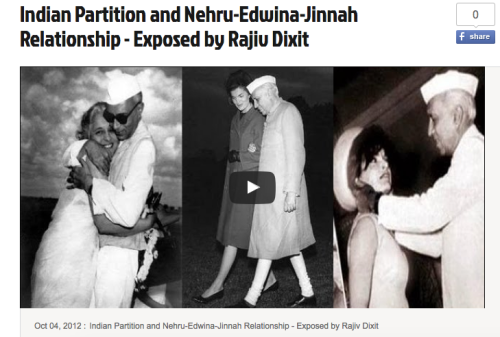
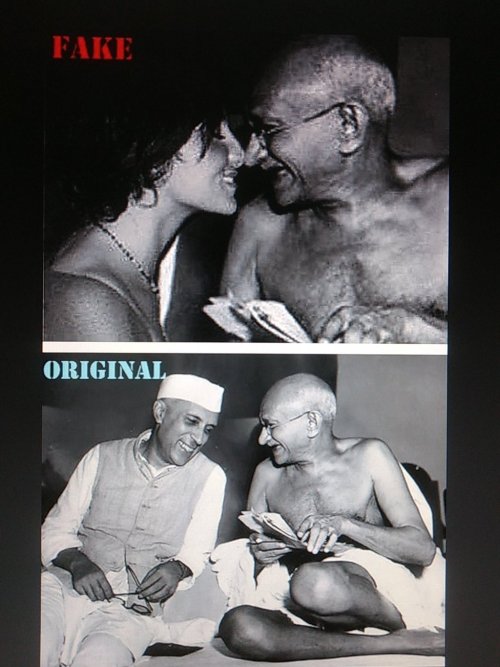
Edwina Mountbatten is one of the key pieces in the sabotage, and as such can be used to prove that this campaign of lies is sabotage carried out through social media. The Mountbatten papers are not a suddenly discovered relic dug out from the ruins. The papers have been kept for years, as well as several biographies written about both the Mountbattens and Nehru – all of which mention the latter’s very close friendship with Edwina. My point is that it wasn’t significant at all until they started making it so – with crude Photoshopped photographs and faked letters and incidents. Several letters to and from Edwina and Nehru are open in archives, and it’s absolutely astounding how the right wing could turn a completely open relationship into a conspiracy of drama and falsehood. Since this friendship was openly observed by the public for years; with Pamela Mountbatten herself commenting on the sweetness of their alliance - why is it sent secretly through Whatsapp like a guilty child hiding dirty magazines?
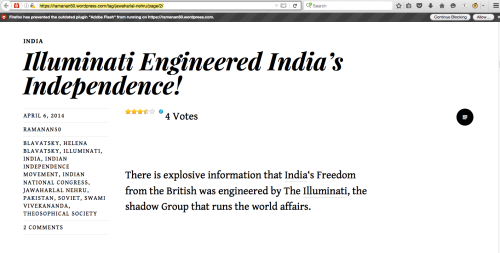
Jawaharlal was called Chacha Nehru by kids for a reason; he didn’t wake up one day and legally change his name. So what sort of heinous undertaking was it that changed the man everyone saw as chacha into a pervert? Some digging had to be done. There are a dozens of blog pages containing such filth depicted above; hence I aimed to find the first mention of it, and after tweaking Google search results – I found the intellectual individual. Yes, this lone ranger back in 2001 with a conspiracy theory blog – who with all seriousness claims that the Illuminati was involved in Indian independence and quotes absolutely no source other than another blog aptly titled ‘Nehru was born in a brothel.’
yes. this guy is the source.
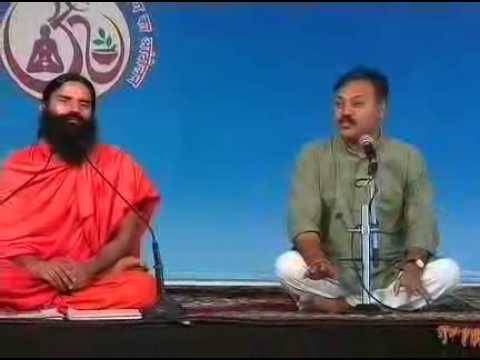
So this! This man is our wise and learned political source, this is our scholarly article upon the illnesses suffered by our Prime Minister, the parental relations of Sonia Gandhi, Indira Gandhi’s secret life. A blog run by a sole genius with a third-grade command over the English language. This man, seemingly defying all laws of biology, had given birth to many other blogs, continuously reproducing for the past fifteen years - like a rabbit, if rabbits were feral and full of crap. Rajiv Dixit too, who claims on his Wikipedia page that he’s a ‘social activist’ has a series of YouTube videos titled aggressively, ‘NEHRU WOULD DO ANYTHING FOR A GIRL’ which also contains much fluttering text, a total of zero sources, and music to pierce even the ears of the deaf. I sincerely hope that Rajiv Dixit does not remain your political or intellectual hero, considering he dallied with the likes of Baba Ramdev and has other videos titled ‘How to be healty without the use of Doctor.’
political intellectuals of the highest order
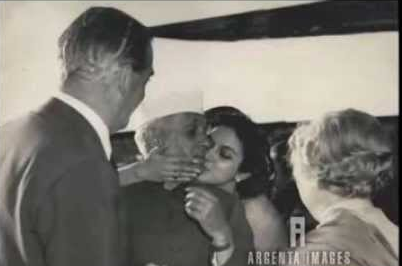
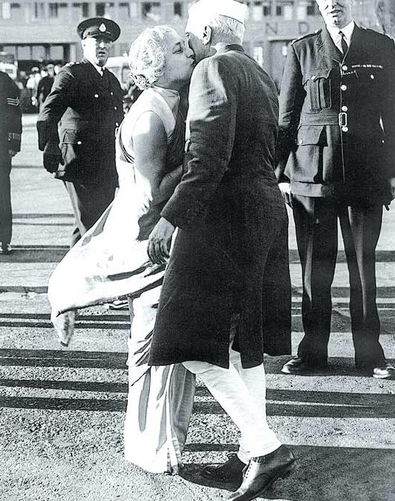
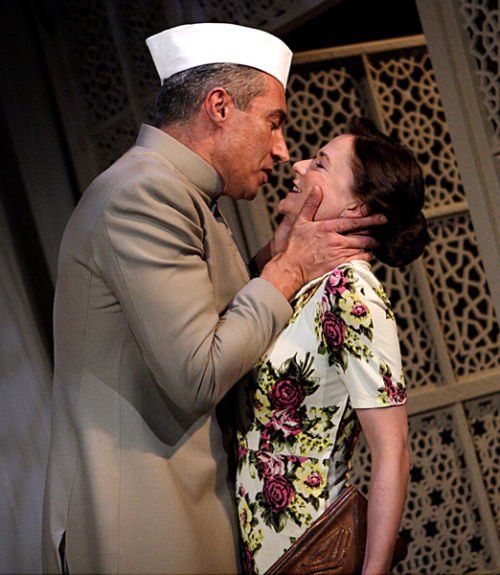
Baseless sites like these are then copied into Whatsapp messages with a plethora of “!!!!” and “~~~~” emojis; and delivered directly to the smartphones of Mamma and Pappa. I understand why they’re doing it; by alienating Nehru, they can cling to other freedom fighters by portraying them as anti-Congress, but such methods are reprehensible. Accompanying these are often a large archive of pictures; which I’ll also assist in clearing up the misconceptions behind. Because it really does just take two seconds.
His sister
his other sister
this isn’t even Nehru, it’s a screencap from a British play, ‘Drawing the Line.’ the actor in question is Silas Carson
okay for god’s sake you cannot be serious
This is the approach with which rumors that once floated only in whispers and the farthest of right wing magazines turned into a deliberately malicious smear campaign in the mainstream. Recently, IndiaToday had unearthed the existence of paid communities of young IT specialists who would ruin political reputations for a set amount of money, and after studying the content of such Whatsapp groups, it’s very probably that at least a couple of such businesses were involved. A quotation on Nehru’s head – sixty years after his death. It would be comedic if it didn’t have so many elements of tragedy.
Of course, the Congress tries to revive Nehru’s name; with much fanfare of his achievements, and Bal Diwas celebrated widely – but that’s another reason why the smear tactics are working well. People that even moderately dislike Congress, whether the top leadership or even a single grassroots worker are far more likely to believe such messages. The party tries heartbreakingly hard, with the NSUI leaders and Sonia Gandhi publishing and re-releasing Nehru’s letters and works, but what is needed now does not seem to be more coverage of his political achievements, but more awareness of his personhood. It’s just not enough. More illustrations of how he was oddly excited to be in jail, how he was moved to tears by Lata Mangeshkar, how he took his morning phone calls standing on his head, and how he made even starchy Lord Mountbatten sprawl on the floor and do yoga. The public should relate to him again, because the current portrait the digital world has drawn is far from flattering.
The relentless banning or delaying of books by the government also contributes indirectly to the phenomenon of people avidly believing such conspiracy theories. With the (trashed) film Indian Summers, India had made a fuss about removing ‘love scenes between Nehru and Mountbatten’ from the film. This led those right wingers principled enough to quote a source, to mention the book it was based on when confronted with a source for their explicit fanfiction. However, those who had read the book Indian Summers by Alex von Tunzelmannwould know that nowhere were any truly romantic scenes present, and rather just an imaginative account of an alleged relationship. Books like the famously delayed The Red Sari didn’t seem harmful after reading, in fact it endeared Sonia Gandhi to me even more than before (although it could be seen as an invasion of privacy) – yet seemed positively dangerous and rumor filled before I had read it. Similarly with M.O. Mathai’s Reminiscences of the Nehru Age (take this with a huge bucket of salt though) – whilst he made some truly ridiculous claims, it’s no worse than the mildest Whatsapp message and many of the things people claim he wrote - he didn’t.
Nehruvians in power should not ban books or films; it is better to read the truth or an exaggerated version of it rather than to read falsehood altogether. Instead of banning books and films that already exist and fueling the people’s suspicion that there is something to hide, would it not be better to release new films that follow as close to the truth as possible? Political series featuring Nehru have been very well received, like Bharat ek Khoj, or Samvidhaan. However, these series have views numbering in the several hundreds whilst Dixit’s conspiracy videos have thousands of views and comments. Introducing a new biopic that adheres to historical lines (with some caricature expected, it’s only natural) would be a far more effective way to convince the public than to conduct an embargo on books that have a mild overstep or two.
But the Congress Party should not be the only one trying – it has to be a grassroots effort if it is to genuinely look apolitical. There are those that do not avidly support right wing parties, yet believe in the idea that Nehru was definitely all those things outlined in the Whatsapp messages and blog sites(Interview). The only way to counter ‘facts’ you see on such sites would be to ask for proof. More often than not, there will be absolutely zero proof for any, whilst there are numerous researched and sourced rebuttals to most of the propaganda. Quora remains a source for both truth and lies, and again it is incredibly easy to differentiate the former from the latter. Key Tip: nobody titles their historical journal ‘Nehru Born In Brothel,’ - click on it and it’s a loony conspiracy blog. Freedom of speech works both ways; firstly, it is not freedom to lie, and secondly, you’re free enough to go to Dixit’s videos and report them for defamatory content, or counter in the comments. Without grassroots co-operation, it would only be seen as more political propaganda, which is why you are equally responsible for such untruths being circulated.
We must be the only country that kills our heroes in this manner. Sardar Patel had worried constantly about quotations and assassination threats toward Nehru; and those who pretend to revere Patel today are the very same who circulate the biggest quotation on the head of the First Prime Minister. And it’s nothing but heartless, some of these claims; one must foil poison with the truth, lest the vast and sudden nature of social media spreads it even further. Just remember, if the man known as Chacha by children nationwide ever knew that large swathes of the country now consider him a pedophile, it would break his heart.
http://www.sportskeeda.com/cycling/indian-mens-junior-cycling-team-reach-world-number-1-ranking Indian Men's junior cycling team create history by attaining world number 1 ranking
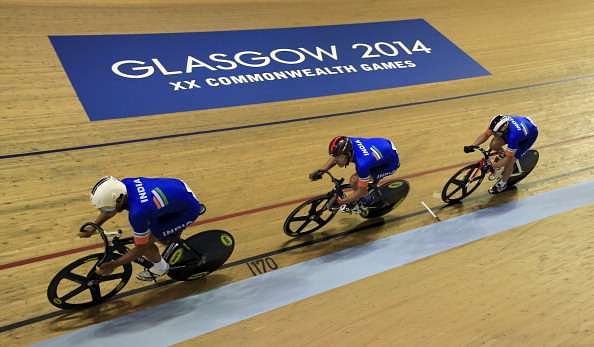
Indian Men’s senior team at the 2014 Commonwealth Games
In a first for Indian cycling across any age category, the Men’s junior sprint have cemented the world number 1 spot in the team sprint event as per the recently released Union Cycliste Internationale (UCI) rating release. The rankings are updated every three months, and the national team has jumped directly from 11th spot to number one with a points tally of 1012.5 points.
The narrowly edged out Poland, who occupy second with 960 point, followed by South Korea who raked in 900 points. General Secretary of the Cycling Federation of India (CFI) Onkar Singh said, “You have just witnessed history in the making, this feat is amazing because when the Federation started functioning properly back in 2013, the junior team was ranked 149th, so you see how much they have progress. What we should also highlight is Indian cycling’s unique landscape. Unlike other sports where they train under one nationational coach, all the 15 boys are from different parts of the country and train under different coaches. This highlights how much India has progressed, despite the scattered talent.”
One of the squad members Sanuraj also reached the individual top ten rankings in the Keirin event. The women’s junior team also showed substantial improvement by occupying the world number 8 spot. Team member Anu Chotia also entered the world top 20. In the senior categories, Andaman and Nicobar Islands cyclist, Deborah Herold remains top ranked, holding the sixth spot, after reaching a career high of fourth in December.
Singh added, “Rio qualification didn’t go as per plan, but our goal still is 2020 Tokyo, I’m confident we will win a medal at that particular event, considering our growth as of now.” The Men’s junior team will again be in action on July 24 at the UCI Junior track Championships in Switzerland. The team has been training for the event under the guidance of the Indian Air Force.
Will Rahul Gandhi score a self-goal by turning down the suggestion of the Supreme Court that he should apologise to the RSS for blaming it for the murder of Mahatma Gandhi or be prepared to face the trial in the defamation case? Or, will it give him and the Congress an opportunity to take on the RSS ideologically and to put all the unpalatable facts about the organisation before the people through the Supreme Court proceedings and expose the RSS’ doublespeak on the Mahatma whom it publicly praises but privately loathes?
It is being argued that there is very little chance of Rahul Gandhi winning the case. From a strictly legal point of view, it might be correct as the Supreme Court has revealed its mind by asking him, “Why did you make a sweeping statement against the RSS branding everyone associated with the organization in the same brush? You can't make wholesale denunciation of an organisation.” The court has also asked him that should he not regret his statement and face trial, he would have to prove what was the “public good” in his statement.
At a time when assembly elections in Punjab and Uttar Pradesh are approaching, will it be a wrong political strategy for Rahul Gandhi to fight the ideological-political battle even if there is a real risk of his going to jail? Will his going to jail not galvanise his Congressmen and women all over the country, something that his party badly needs? It does not seem so.
What did Rahul Gandhi really say?
Congress vice-president Rahul Gandhi. PTI
Addressing an election rally at Thane in March 2014, he allegedly said: “RSS people killed Gandhiji and today their people (BJP) talk of him...They opposed Sardar Patel and Gandhiji.” Was he really very wide of the mark? Let’s have a look at what the then Deputy Prime Minister Sardar Vallabhbhai Patel, who was also the Home Minister, had to say about the RSS in the context of Mahatma Gandhi’s assassination. On 18 July, 1948, in a letter to top Hindu Mahasabha leader Shyama Prasad Mookerjee, who later founded the Bharatiya Jan Sangh, he wrote: “As regards the RSS and the Hindu Mahasabha, the case relating to Gandhiji’s murder is sub judice and I should not like to say anything about the participation of the two organisations, but our reports do confirm that, as a result of the activities of these two bodies, particularly the former, an atmosphere was created in the country in which such a ghastly tragedy became possible.” Sardar Patel is the current icon of the RSS-BJP and his words cannot be taken lightly. He held the RSS even more responsible for “creating an atmosphere” in which the Mahatma’s assassination could take place.
The entire case of the RSS having no role in the Mahatma’s assassination rests on the “fact” that much before Nathuram Vinayak Godse committed the murder on 30 January, 1948 he had left the RSS and thus had no organisational links with it. For a long time, this was believed to be true. However, Nathuram’s younger brother Gopal Godse, himself one of the accused in the Gandhi murder case, cleared the air in an interview given to Frontline (January 28, 1994). “All the brothers,” Gopal Godse said, “ were in the RSS. Nathuram, Dattatreya, myself and Govind. You can say we grew up in the RSS rather than in our home. It was like a family to us. Nathuram had become a baudhik karyavah [intellectual worker] in the RSS. He has said in his statement that he left the RSS. He said it because Golwalkar and the RSS were in a lot of trouble after the murder of Gandhi. But he did not leave the RSS.” He further clarified, “You can say that RSS did not pass a resolution, saying, ‘go and assassinate Gandhi’. But you do not disown him (Nathuram). The Hindu Mahasabha did not disown him. In 1944, Nathuram started doing Hindu Mahasabha work when he had been a bauddhik karyavah in the RSS.”
In this context, we must remember that the RSS and the Hindu Mahasabha enjoyed a symbiotic relationship with each other and membership of one did not preclude that of the other. One could be active in both the organisations. Vinayak Damodar Savarkar, the propounder of the theory of Hindutva, was never formally part of the RSS but he and his theory continue to inspire it even today. He too was an accused in the Gandhi murder case but was let off not because of lack of evidence, but because the statement of a prosecution witness, who was otherwise found reliable, could not be independently corroborated.
It is being argued that in the post-Partition months when the subcontinent witnessed unprecedented communal strife and history’s biggest transfer of population, “Gandhi emerged as the most “hated, despised and ridiculed” figure in a nation craving for revenge and violence well before he was done in by Godse.” This view was first articulated in an editorial in Organiser (January 11, 1970), then edited by KR Malkani: “It was in support of Nehru’s pro-Pakistan stand that Gandhi went on fast and, in the process, turned the people’s wrath on himself.”
However, what do the facts tell us?
Mahatma Gandhi undertook an indefinite fast on 13 January, 1948. Two days later, replying to newspaper correspondents’ questions in a dictated message, he said, “My fast, as I have stated in plain language, is undoubtedly on behalf of the Muslim minority in the Indian Union and, therefore, it is necessarily against the Hindus and the Sikhs of the Union and the Muslims of Pakistan. It is also on behalf of the minorities in Pakistan, as in the case of the Muslim minority in the Indian Union.” It is absolutely clear that Gandhi was fasting in support of the minorities of both India and Pakistan — Muslims of India and Hindus and Sikhs of Pakistan. It is also being asserted that “Gandhi was despised, booed and shunned by his own people for his adamant demand that India should help the new nation-state of Pakistan monetarily.” However, as GD Tendulkar has explained, owing to the Kashmir dispute, India had been withholding from Pakistan fifty-five crores of rupees which it had previously agreed to hand over as part of the division of the assets.
The fact is that Gandhi was “despised, booed and shunned” not “by his own people” but by the Hindu and Sikh refugees who had crossed the border and suffered unspeakable cruelty at the hands of the Muslims. Similarly, innocent Muslims of Delhi were bearing the brunt of the refugees’ anger. Their mosques and houses were being forcibly occupied. Gandhi’s fast was directed against the terrible communal violence in which Hindus, Muslims and Sikhs had been participating and it had stirred the conscience of people throughout the country. Had he been shunned by his own people, Hindu, Sikh and Muslim leaders, including representatives of the RSS and the Hindu Mahasabha, would not have met him on 18 January, 1948 to persuade him to break his fast as they had brought with them a written pledge to maintain communal harmony.
At a time when the RSS-BJP combine is busy appropriating icons like Mahatma Gandhi, Sardar Patel, BR Ambedkar and Bhagat Singh, it will be a worthwhile exercise if historical facts about their attitude towards Gandhi are brought before the Supreme Court. Even if Rahul Gandhi loses the legal battle, he would have won politically.
The Ministry of Information and Broadcasting established a New Media Cell on September 4, 2013.
2
It's headed by a Joint Secretary (P&A).
3
The functional and operational support is provided by New Media Wing, the erstwhile Research Reference and Training Division (RRTD) of the Ministry.
4
It provides reference services to the Ministry of Information and Broadcasting and its Media Units for planning media policies, strategies and campaigns.
5
It monitors social media on a 24X7 basis and sends reports relating to media reports, content analysis and special reports such as floods or PM's visits to bureaucrats and ministries on a daily basis.
6
It also produces packaged information for the media persons and media researchers and scholars.
7
It compiles the book entitled India - a reference annual, which contains information on India’s geographic and demographic features, its polity and economy, its plans and programmmes for socio-economic development.
8
The National Documentation Centre for Mass Communication functions under this Cell. The NDCMC documents and indexes all news-items, articles and other information material available on mass communication.
9
It periodically releases a Bulletin on Film, Bibliography Service, Media Update, Who’s Who in Mass Media and Current Awareness Service among others.
10
The Cell also has a well-stocked library that includes specialized books on subjects pertaining to journalism, public relations, advertising and audio-visual media, prominent encyclopedia series, yearbooks and contemporary articles.F